
- July 30, 2025
- Posted by: admin
- Categories: Food Security, Food security, Gender & Protection, Health, Health & Nutrition, Nutrition, Projects, Protection, Stories, WASH, WASH
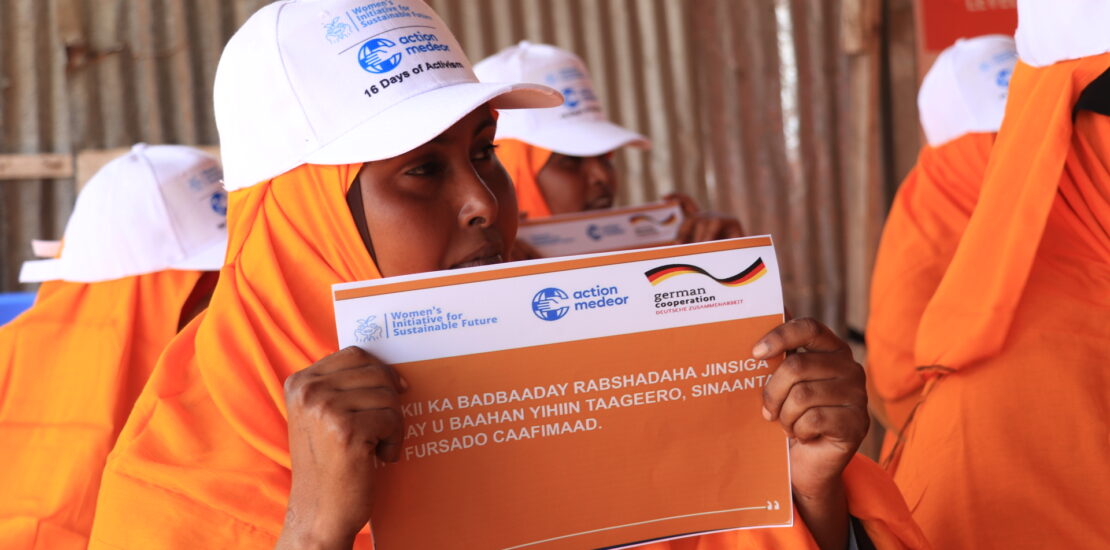
WSF’s humanitarian response in Somalia is proving vital as international funding cuts begin to cripple local aid operations. In the dusty outskirts of Mogadishu, Muna, a mother of four, walks two hours each day to reach a temporary health post run by a local NGO. She doesn’t expect medicine or a doctor. She’s seeking guidance on feeding her malnourished daughter, finding clean water, or learning whether the clinic will close like the last one.
Somalia’s humanitarian sector is under immense pressure. Donor funding has been delayed, redirected, or reduced, leaving local NGOs to carry the burden. Services are shrinking, and programs that once reached thousands are being paused or shut down. Yet, the need on the ground keeps rising.
While many organizations retreated, WSF, a women-led national NGO based in Mogadishu, stepped forward. Founded to address the exclusion of Somali voices from humanitarian planning, WSF stayed in the field as others scaled back.
In Banadir region districts like Kaxda and Dharkenley, WSF mobilized women volunteers, reopened safe spaces, and reactivated support networks for survivors of gender-based violence. These actions weren’t donor-driven—they came from the community itself. WSF simply helped bring them to life.
Empowering Communities to Lead
At the core of WSF’s humanitarian response in Somalia is the belief that Somali communities know what they need. WSF doesn’t impose solutions. Instead, it co-creates programs with women and youth, from nutrition outreach and mental health support to vocational training. Every intervention centers local ownership and long-term resilience.
WSF has adopted a flexible, low-cost model that relies on women-led networks. These networks serve multiple roles. They check in on families, identify households in crisis, share resources, and direct people to services when formal systems collapse.
For families like Muna’s, this informal safety net often makes the difference between hope and despair.
WSF goes beyond service delivery. The organization advocates for structural reform in how humanitarian aid is funded and managed. It actively participates in regional coalitions pushing for direct support to national NGOs.
It also trains young Somali women in humanitarian reporting, monitoring, and evaluation, ensuring the next generation of aid workers is local, skilled, and rooted in community experience.
Many communities no longer believe help will arrive when needed. But WSF is changing that. Where larger international NGOs have pulled out, WSF remains not because of better funding, but because it was built by women who live in and understand these communities. Their commitment doesn’t end with a funding cycle. It’s a lived reality.
When systems fail, people look around to see who stayed. WSF is one of the few that has. It listens, adapts, and responds even when resources are scarce.
That is what sustainable humanitarianism looks like in Somalia. And that is what WSF’s humanitarian response in Somalia continues to deliver every day’ with dignity, purpose, and resilience.